In the early 1980's, scientists in China began to study the medical benefits claimed for Qi Gong. Since then, research on hundreds of medical applications of Qi Gong have been reported in the Chinese literature. Of special interest for the present article are clinical reports of the medical benefits of Qi Gong that claim to retard or reverse some diseases associated with aging.
Most of the original research was reported in Chinese, but access in English to most of this material is possible by reference to the proceedings of international conferences of Qi Gong. Since 1986, ten such proceedings contain about 840 abstracts of talks given at the conferences, more than half of which are in English. These abstracts, along with about 160 abstracts of articles in the scientific literature, have been organized as a computerized database. The database enables searches and development of bibliographies across this entire body of information by using any key word. The clinical outcomes reported in this article are partly based on material in the database and partly on the author's person contacts with researchers.
The word Qi Gong is a combination of two ideas: Qi the vital energy of the body, and Gong the skill of working of the Qi. Medical Qi Gong for health and healing consists primarily of meditation, physical movements, and breathing exercises. Qi Gong practitioners develop an awareness of Qi sensations in their bodies and use their mind, i.e., intention, to guide the Qi in the body. The benefits of Qi Gong are said to extend beyond health and healing to enhance spiritual life and even special abilities, such as psychic powers.
Medical Qi Gong is divided into two parts: internal and external. Internal Qi is developed by individual practice of Qi Gong exercises. When Qi Gong practitioners have sufficiently mastered the skill, they can "emit" Qi (external Qi or Wai Qi in Chinese) for the purpose of healing another person. There are many scientific reports of the medical existence and efficacy of emitted Qi. The present article focuses mainly on internal Qi because almost everyone can learn Qi Gong exercises for maintaining health and for self-healing, whereas, there are a limited number of skilled Qi Gong masters available for healing.
There are numerous reports of the effects of emitted Qi on living systems and the functions and organs of the human body. The present author reviewed some examples of medical applications of Qi Gong and emitted Qi on humans, animals, cell cultures, and plants, and he also published some of his experimental research on physiological effects of Qi Gong. He discussed some clinical and experimental evidence showing that Qi Gong exercise and external Qi affects various functions and organs of the body. A short list of some of the functions and organs affected by Qi Gong, and the measurement techniques employed (in parentheses), include: the brain (EEG and magnetometer); blood flow (thermography, sphygmography, and rheoencephalography); heart functions (blood pressure, EKG, and UCG); kidney (urinary albumin assay); biophysical (enzyme activity, immune function, sex hormone levels (laboratory analysis); eyesight (clinical); and tumor size in mice.
Clinical studies indicating the anti-aging benefits of Qi Gong
Several clinical studies will be described to illustrate the scope of research on medical applications of Qi Gong to treat chronic medical conditions that may affect the aging process. Some details may be omitted because of space limitations. The critical evaluation of the research studies will be left to medical specialists.
1) Therapeutic balancing of the meridians and functions of the body by Qi Gong
The profound effect that internal Qi Gong practice may have on balancing the energies of the organs and functions of the body is illustrated by measurements using Electroacupuncture According to Voll (EAV). In EAV the electrical conductance of the skin above individual acupuncture points is measured using low voltage and low current. Diagnosis depends on measuring the relative electrical conductance and its time dependence. An important diagnostic criterion of degeneration of an organ is an "indicator drop" that may occur during the measurement when the conductance reaches an apparent maximum value but then decreases before leveling off.
Measurements were made at 24 acupuncture points at the ends of the 12 meridians in the fingers and toes of subjects and were made by the same operator and equipment. The subjects were asked to perform a Qi Gong exercise of their choosing for 10 to 15 minutes, for example, sitting or standing meditation or moving Qi Gong. Two series of EAV measurements were made before and after healthy subjects practiced Qi Gong.
In the first series, four subjects were examined by EAV before and after they practiced Qi Gong. Qi Gong exercise decreased the average of the EAV measured values of the four subjects in the range of -19 to -31% (p<0.004). Qi Gong eliminated almost all the indicator drops.
In the second series, each of seven subjects was examined by EAV three times in a blind protocol so that the operator did not know whether a subject had practiced Qi Gong before the second or third examination. The results showed that Qi Gong exercise changed the average EAV measured values in the range of -17 to -35% for four subjects and in the range of 4 to 15% for three subjects. Indicator drops again were markedly decreased.
These preliminary results show that internal Qi Gong practice can make significant changes in the therapeutic balancing of the meridian and organ systems.
In a similar type of study, the electric current at acupuncture points on 14 meridians was measured using a single square wave voltage pulse technique. Both a Qi Gong master, who emitted Qi, and a Qi-receiver were measured simultaneously and continuously. The results show that internal and external Qi Gong produce different values in some measurement parameters, and also some synchronous behavior was observed between the sender and receiver.
2) Clinical studies of effects of Qi Gong on hypertensive patients
Several groups in China have investigated the effects of Qi Gong on hypertension (i.e., high blood pressure). The research of Wang, Xu and coworkers of the Shanghai Institute of Hypertension was selected for discussion because it serves as a model for the many different effects that Qi Gong may have on organs and functions of the body. For these studies, the patients practiced "Yan Jing Yi Shen Gong" for 30 minutes twice a day. This Qi Gong is claimed to be especially valuable for therapeutic purposes and delaying senility. The Qi Gong exercise consists of a combination of sitting meditation and gentle physical movements that emphasizes a calm mind, relaxed body, and regular respiration.
In 1991, the Shanghai group reported a 20-year controlled study of the anti-aging effects of Qi Gong on 204 hypertensive patients. Subsequently, they reported a 30-year follow-up on 242 hypertensive patients, and more recently, the researchers reported an 18-22 year study of 536 patients. The patients were randomly assigned to the two groups. To control blood pressure, the patients were given the same hypotensive drug and in the same hospital. None of the patients smoked.
a. Blood Pressure
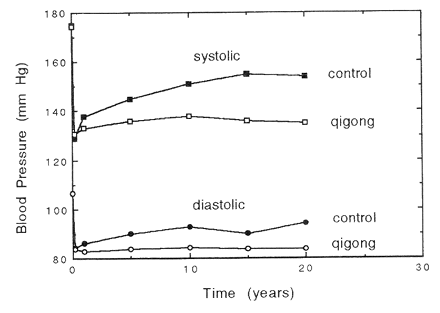
The effect of Qi Gong exercise on blood pressure is shown graphically in Fig. 1. The blood pressure (systolic and diastolic) in millimeters mercury is plotted as a function of time over 20 years for the group consisting of 242 patients, 122 in the Qi Gong group and 120 in the control group. During the first two months, the blood pressure of all patients dropped in response to the hypotensive drug. Subsequently, and over the period of 20 years, the blood pressures of the Qi Gong group stabilized while that of the control group increased. Remarkably, during this period the drug dosage for the Qi Gong group could be decreased, while the dosage for the control group had to be increased.
b. Mortality and Stroke
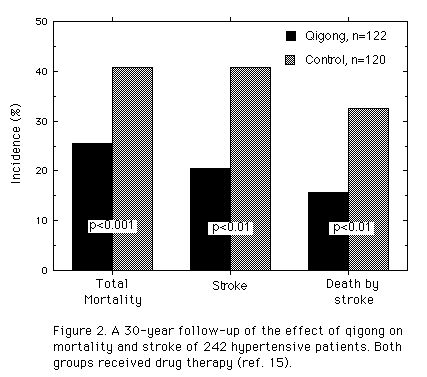
The incidences of mortality and stroke for the 30-year study are shown in Fig. 2. These results show that Qi Gong exercise decreased by about 50 percent the incidence of total mortality, mortality due to stroke, and morbidity due to stroke. At the end of 30 years, 86 patients survived in the Qi Gong group and 68 in the control group. These results clearly show that Qi Gong has significant potential for preventing strokes and extending life.
c. Improvements in heart function and mircrocirculation
Aged hypertensive patients usually are found to have a deficiency of Heart-energy, which often leads to a weakened function of the left ventricle and a disturbance of microcirculation. The researchers evaluated the effects of Qi Gong for 120 aged patients by using ultrasonic cardiography (UCG) and indices of microcirculation.
Experiments showed that the left ventricular function (LVF) in the hypertensive aged group (80 cases) was lower than that in the aged normal blood pressure group (40 cases), while the LVF in the deficiency of Heart-energy hypertensive patients (46 cases) was lower than in the non-deficiency Heart-energy hypertensive patients (34 cases).
After practicing Qi Gong for one year, cardiac output was increased, the total peripheral resistance decreased, and the ejection fraction mitral valve diastolic closing velocity and the mean velocity of circumferential fiber shortening tended to be increased. Significant changes did not occur in the group without Heart-energy deficiency.
Quantitative evaluation of nailfold disturbances in microcirculation was made on the above groups by observing 10 indices of abnormal conditions: configuration of micrangium, micrangium tension, condition of blood flow, slowdown of blood flow, thinner afferent limb, efferent limb and afferent limb ratio, color of blood, hemorrhage, and petechia. The results showed that hypertension had an accelerating effect on the disturbance of microcirculation. The incidence of disturbance of microcirculation disturbance was 73.9% in the deficiency of Heart-energy hypertensive patients. After a year of Qi Gong practice, the incident of disturbance was 39.1% (p<0.01).
The results suggest that Qi Gong exercise has beneficial effects on Heart-energy and regulation of the blood channel, and Qi Gong seems to have improved abnormal conditions of blood circulation.
d. Improvement in sex hormone levels
One consequence of aging is that the levels of sex hormones change in unfavorable directions. For example, female sex hormone (estrogen) levels tend to increase in men and decrease in women. Three studies indicate that Qi Gong exercise can reverse this trend. The effect of Qi Gong exercise on plasma sex hormone levels was determine for hypertensive men and women. The sex hormones levels were measured before and after Qi Gong practice for one year.
Seventy male patients with essential hypertension (ages 40 to 69; disease stage II) were divided into two groups. For the Qi Gong group (n=42), which practice Qi Gong for one year, the estradiol level (E2) decreased from 70.1 to 47.7 pg/ml, a decrease of 32% (p<0.01), while no significant changes occurred in the control group (n=20). The testosterone levels (T) of both groups decreased about 7%. The value of E2 for the Qi Gong group (47.7 pg/ml) approached that of healthy men (42.2±5.8 pg/ml) of the same age but without hypertension or cardiovascular, pulmonary, hepatic, renal, or endocrine diseases (p<0.05).
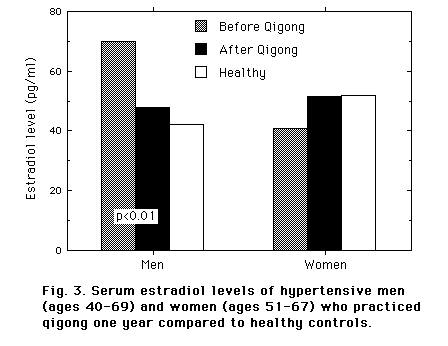
For women (ages 51 to 67, the number in the group is not available), the aging process was associated with failure of ovarian function manifested by decreased E2 and increased T levels. Qigong practiced one year resulted in an increase of E2 from 40.9±.3.5 to 51.6±3.5 pg/ml, a value about equal to that of normal menopausal controls without hypertension or cardiovascular, pulmonary, hepatic, renal, or endocrine diseases. The value of T was also increased by Qi Gong from 25.5±2.2 to 37.2±2.2 ng/dl.
The favorable changes in estradiol levels, E2, brought about by Qi Gong are summarized in Fig. 3 for both men and women.
In an auxiliary study, the 24-hour urinary estradiol levels were determined in 30 men ages 50 to 69. Qigong for one year resulted in a decrease of 31% in E2 and a decrease of 54% in the estradiol/testosterone ratio (E2/T). These changes were accompanied by improvements in symptoms associated with Kidney deficiency hypertension, such as soreness, dizziness, insomnia, hair loss, impotence, and incontinence. The average score for these symptoms was changed favorably by Qi Gong from 5.5±2.3 to 2.8±1.3 (p<0.001).
Ye Ming and co-workers reported similar favorable changes in plasma sex hormone levels E2 in 77 male and female Qi Gong exercisers after 2 months Qi Gong compared with 27 controls. They did not observe significant changes in testosterone.
The three studies above show that Qi Gong exercise can help restore the sex hormone levels that had deteriorated because of aging.
e. Changes in blood chemistry in hypertensive patients
Wang, Xu and co-workers made a series of determinations indicating the profound effects that Qi Gong exercise may have on blood chemistry of hypertensive subjects. Improvements were noted in plasma coagulation firbrinolysis indices, blood viscosity, erythrocyte deformation index, levels of plasma tissue-type plasminogen activator (tPA), plasminogen activator inhibitor (PAI), VIII factor related antigen (VIII R:AG), and anti-thrombin (AT-III). In another study, they reported that Qi Gong exercise beneficially changed the activities of two messenger cyclic nucleotides (cAMP and cGMP).
Reversing symptoms of senility
To study the mechanism of keeping fit by Qi Gong, a controlled study was made of 100 subjects classified either as presenile or with senile impaired cerebral function. The subjects were divided into two groups of 50 people each with a mean age of 63 years and with a similar distribution of age and sex. The Qi Gong group practiced a combination of static and moving Qi Gong. The control group exercised by walking, walking fast, or running slow. According to TCM method of classifying the vital energy, more than 80% of the patients in each group were classified as deficient in vital function and vital essence of the Kidney. Criteria for judging outcome were based on measuring clinical signs and symptoms including cerebral function, sexual function, serum lipid levels, and function of endocrine glands.
After six months, 8 of the 14 main clinical signs and symptoms in the Qi Gong group were improved above 80%, whereas none of the symptoms in the control group were improved above 45%. These results suggest that Qi Gong can reverse some symptoms of aging and senility. In this regard, Qi Gong exercise is superior to walking or running exercises.
Enhanced activity of anti-aging enzyme SOD
Superoxide dismutase (SOD) is produced naturally by the body but its activity declines with age. SOD is often called an anti-aging enzyme because it is believed to destroy free radicals that may cause aging. The effects of Qi Gong exercise to treat disorders of retired workers were studied by Xu Hefen and coworkers and included determinations of plasma SOD.
For their study, 200 retired workers, 100 males and 100 females, ranging in age from 52 to 76 were divided into 2 groups: the Qi Gong exercise group and the control group, and each group consisted of 50 males and 50 females. The main Qi Gong exercise was Emei Nei Gong (one kind of Qi Gong exercises of the Emei School), and was practiced at least 30 minutes a day.
The result showed that the mean level of SOD was increased by Qi Gong exercise. For example, the SOD level was larger in the Qi Gong group (about 2700 µ/g Hb) and than in the control group (1700 µ/g Hb), and this difference was significant (p<0.001). This study shows that Qi Gong exercise can stimulate physical metabolism, promote the circulation of meridians and regulate the flowing of Qi and blood, thus preventing and treating disorders of aging and promoting longevity.
Cardiovascular function
Several studies reveal the potential benefits that Qi Gong may have for improving the cardiovascular function of those with heart disease as well as old people. This conclusion is based on three studies reporting that Qi Gong exercise can protect healthy pilots from altitude stress when they flew rapidly from a low altitude to the high altitude of the Tibetan highlands.
Before entering the Tibetan highland, 66 healthy young men were divided into two groups: a Qi Gong group of 32 men who did Qiyuan Qigong exercise for 4 weeks, and a control group of 34 men who exercised to radio music. The two groups of men rapidly entered the highlands from a lower altitude. Before and after entering the highland, measurements were made of symptoms of altitude sickness and physiological changes. The Qi Gong group suffered less altitude stress than the control group as measured by blood pressure, heart rate, oxygen consumption, microcirculation on the epex of tongue and the nail fold, and the temperature at the Laogong point of the left hand (p<0.01). The researchers suggest that Qi Gong can prevent stress from altitude changes.
In another study of changes in altitude, healthy young men were divided into three groups. Forty males were in the Qi Gong group and practiced Qiyuan Qi Gong for 4 weeks prior to entering the highlands; 40 men were in the control group and exercised to radio music for 4 weeks prior to entering the highlands; and 40 males were residents living at high altitudes. The results show that the integral value of symptoms of acute mountain sickness was lower in the Qi Gong than in control group (p<0.01 to 0.05). Pulmonary ventilation of the Qi Gong group was significantly improved compared with the control group (p<0.01 to 0.05), and nearly equal to the resident group.
In another study, air force pilots were randomly divided into two groups: a Qi Gong group of 22 men who had practiced Qiyuan Qigong exercise for eight weeks, and a control group of 18 men who did physical exercise for eight weeks before entering the Tibetan highlands. Microcirculation was measured at tongue apex and the nail fold, and also from the temperature at the Laogong point in palm of the left hand. When the men entered the high altitude, abnormal blood pressure and microcirculation of tongue apex and nail fold occurred in both groups. The abnormalities were statistically less in the Qi Gong group than in the control group (p<0.01). The temperature at Laogong kept steady in the Qi Gong group, but was reduced in the control group (p<0.05).
The results of these three studies with healthy subjects lead to the conclusion that Qi Gong also should be effective in improving the health of people with cardiovascular conditions including the aged. In fact several research studies have reported such beneficial effects of Qi Gong on cardiovascular diseases. The three studies also provide evidence that Qi Gong exercise is superior to physical exercise such as calisthenics.
Blood flow to the brain
Qigong exercise has been shown by rheoencephalography to increase blood flow to the brain. For 158 subjects with cerebral arteriosclerosis who practiced Qi Gong for 1 to 6 months, improvements were noted in symptoms such as memory, dizziness, insomnia, tinnitus, numbness of limbs, and vertigo headache. During these studies, a decrease in plasma cholesterol was also noted. These results may offer hope to people with cerebral arteriosclerosis.
Cancer
Feng Lida pioneered in research showing that emitted Qi from Qi Gong masters produced marked changes in cell cultures of cancer cells from mice. Several studies reported the effects of emitted Qi on tumors in animals. For example, emitted Qi was reported to inhibit the
growth of implanted malignant tumors in mice but did not destroy the tumors. Encouraged by the results with animals, researchers carried out clinical research on the effects of Qi Gong on human subjects with cancer.
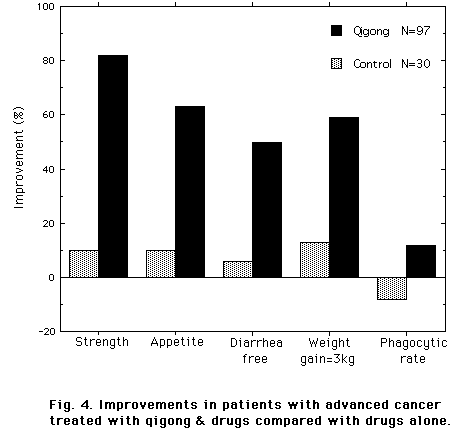
In a clinical study of Qi Gong as a therapeutic aid for patients with advanced cancer, 127 patients with medically diagnosed malignant cancer were divided into a Qi Gong group of 97 patients and a control group of 30 patients. All patients received drugs, and the Qi Gong group practiced Qi Gong for more than 2 hours a day over a period from 3 to 6 months. The results summarized in Fig. 4 show that both groups improved, but the Qi Gong group showed improvements four to nine times greater than the control group in strength, appetite, diarrhea free, and weight gain of 3 kg. The phagocytic rate, which is a measure of the immune function, increased in the Qi Gong group but decreased in the control group. There are claims that Qi Gong can cure cancer. Researchers, who seem to be more conservative, generally express the opinion to the author that Qi Gong can at least slow the growth of cancerous tumors and reduce their size.
Combination therapy of Qi Gong & drugs is superior to drug therapy alone
There is ample evidence in the literature that therapy by a combination of Qi Gong exercise and drugs is superior to that of drugs alone. The advantages of a combination therapy of Qi Gong and drugs over drugs alone were discussed earlier in this paper for hypertension and cancer.
The mechanism of this apparent synergism is not entirely understood, but undoubtedly relates to the fundamental mechanism of Qi Gong. Qigong is believed to remove blocks to the ready flow of the Qi (energy), blood, oxygen and nutrients to all cells of the body as well as to promote removal of waste products from cells of the body. Blocks to energy (Qi) flow may result from injury, disease or stress.
Increases in Qi flow and blood circulation help
nourish diseased or stressed tissue, providing a means for the body to heal itself. This mechanism suggests that Qi Gong also could promote drug uptake to tissue and cells via increased blood circulation. Omura's research shows that drug uptake was increased by using Qi Gongized paper (i.e., paper to which emitted Qi was sent) applied to afflicted area of the body.
Conclusions
This review deals with a small fraction of the large collection of clinical research on medical applications of Qi Gong. The information presented is intended to illustrate the potential of Qi Gong exercise for restoring normal body functions in people with chronic conditions, many of which accelerate the aging process. The main conclusion from many studies is that Qi Gong exercise helps the body to heal itself. In this sense, Qi Gong is a natural anti-aging medicine. Two studies indicate that Qi Gong exercise is superior to some physical exercises.
Qi Gong can complement Western medicine in many ways to provide better healthcare. For example, Qi Gong has special value for treating chronic conditions and as a preventive medicine, whereas Western medicine has special value for treating acute conditions. There are many medical applications of Qi Gong that can complement Western medicine to improve health care. Some examples include chronic problems such as hypertension, cardiovascular disease, aging, asthma, allergies, neuromuscular problems, and cancer. These areas of public health deserve consideration by the Western medical establishment.
References
Footnotes
1.Kenneth M SANCIER, Ph.D., Copresident & Director of Research, 561 Berkeley Avenue, Menlo Park, CA 94025, USA. Phone/Fax +1-415-323-1221.
2. Some of the material in this article was adapted from the article, "Medical Applications of Qi Gong," by K.M. Sancier, Ph.D., and published in Alternative Therapies in Health and Medicine. 1996;2 (1): 40-46.
3. Qi Gong Databaseª is available from the Qi Gong Institute, East West Academy of Healing Arts, 450 Sutter Street, Suite 2104, San Francisco, CA 94108, USA.
4. The p-value is the probability that two quantities are not the same: the smaller the p-value smaller the probability and the more significant the result.
5. Wang C, Xu D. Private communication, May 1995.
6. Duration of the study is not available.
Liste d'autres articles